 by
by 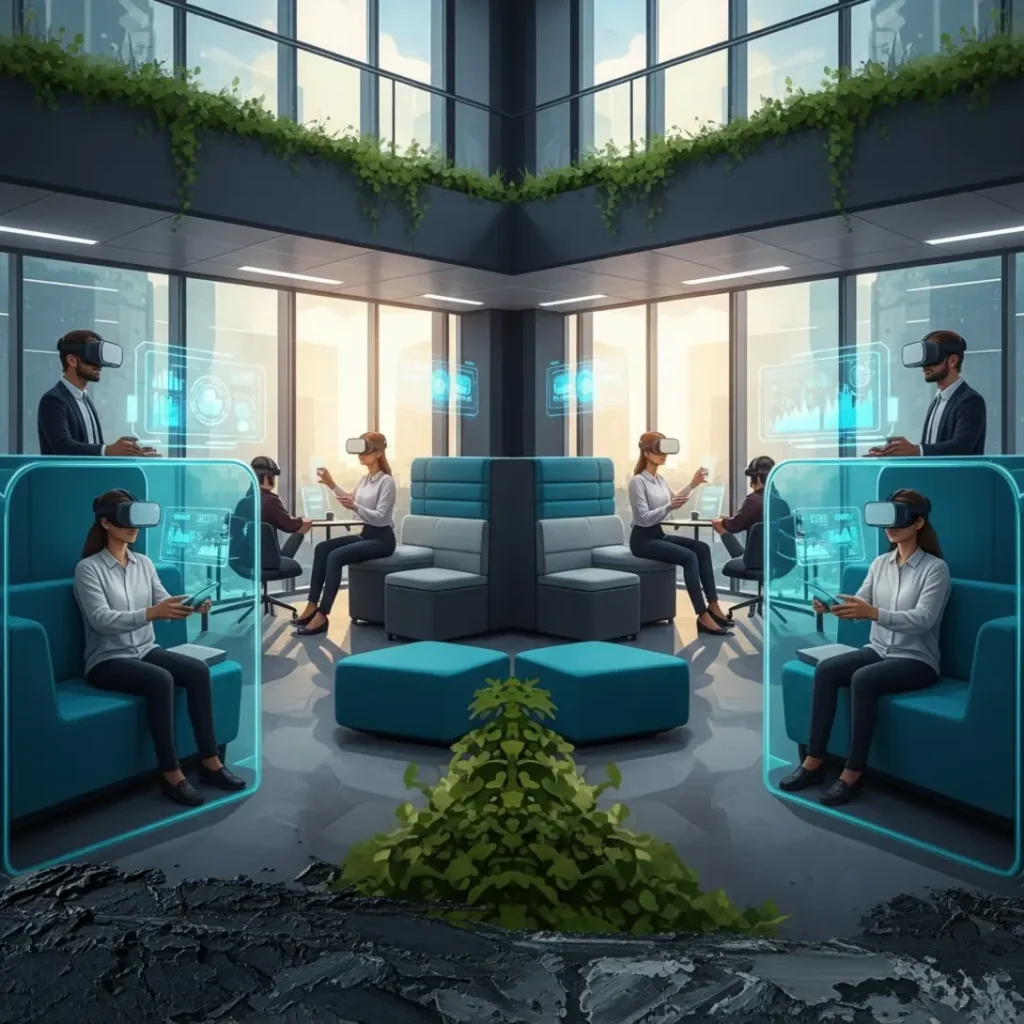
By 2026, immersive training of employees has become a main pillar of corporate game-based learning and has brought a major shift in corporate learning strategies. Virtual environments, realistic simulations, and interactive experiences, considered as part of the immersive training, are becoming an inseparable part of the new fast-evolving digital learning and technological advancement, namely virtual reality training programs. The main driver of this trend is the growing Gen Z workforce that requires more development strategies based on hands-on skills development.
Companies are increasing their investment in employee training in games and immersive training to extract its capabilities of providing increased engagement and performance. Industry experts claim that AI integration along with 3D engines like Unity, VR/AR, and cloud computing have significantly lowered the implementation costs thereby making these advanced training modalities more affordable.
Game-Based Learning: The Rise Past vs Present.
The game-based learning in a corporate setting has seen a drastic change since its inception up to now. The methodological approaches to training were initially limited to the traditional, static, slide-based or video e-learning. Nevertheless, over the past ten years, there has been the trend of more interactive and gamified modules. This change is a continuation of the wider digital learning change, where practice and performance in the context become more important than knowledge transfer.
Today, game-based learning in corporations is a multi-billion dollar business which is growing at very healthy double-digit rates as it gets out of test stages and into mainstream implementation. Serious games and simulations are now a common feature of large-scale training programs, and the elements of a game (levels, challenges, and rewards) are organically integrated into complete learning systems. This integration provides use cases of various compliance, onboarding, sales enablement, and soft skills training.
Remote Work, the Gen Z Workforce, Learner Engagement Drivers of Adoption in 2026.
Remote and Hybrid Work
Since organizations are still adopting remote and hybrid working formats, the demand of self-directed but highly interactive digital learning modules has been on the increase. Immersive and game-based experiences do not require a facilitator in order to guarantee the engagement of the learners, and therefore, it suits asynchronous remote-first settings.
Gen Z Workforce
The young workers of gen Z are accustomed to digital gaming since they prefer interactive learning in the form of bites compared to rigid decks on the slide or long video presentations. Simulations, quests, and challenges of game-based learning fit perfectly well in their digital content consumption patterns, as they prefer to learn in this way.
Student-Involvement Necessity.
The current trends in corporate learning and development (L&D) are more business oriented with less emphasis on content delivery. Game-based techniques offer rich performance metrics, which are not available with the conventional techniques. These analytics are a part of digital learning changes at scale, connecting the learning work with key performance indicators and workforce planning information. In order to get a better idea of these analytics, go to our blog on Key Metrics in Gamification.
Business Benefits Retention, Knowledge Application, Less Training Time.
Engagement and Completion Rates are increased.
The use of game-based training strategies that are already enhanced with the use of points, badges, and learning scenarios contributes to the increased motivation and engagement of learners greatly. Research has recorded an increase in the rate of completion than the conventional e-learning strategies, which have made the strategies to be inevitable in the corporate training programs.
Better Knowledge Retention
Games based modules facilitate knowledge retention through involvement of learners in problem solving and decision making processes. These interactive training sessions result in learners showing better memory of important procedures, policies and skills since there is a greater level of encoding. Discover the effects of gamification on corporate learning and knowledge retention.
Better Knowledge Implementation.
Games and simulations provide employees with a chance to utilize theoretical knowledge in a natural environment. Real time feedback contributes in strengthening the learning process, which improves situational judgment in addition to getting the concepts.
Less Training and Shorter Time-to-Competence.
Companies having well-designed game-based learning techniques experience less onboarding time and faster time-to-competence. However, in a job like sales and customer service and operations, immersive training allows new employees to train on the tasks with realistic simulations which reduces the length of a learning curve shortening the learning time considerably.
Trends in Technology AI, 3D, Cloud Platforms.
AI-Driven Adaptivity
Artificial Intelligence (AI) can be used to improve the training process through individualization of difficulty, pacing, and feedback according to the performance of each learner. Content generation is also automated by AI and insights on large datasets of performance drive the digital learning revolution.
3D Engines and Simulations
The rich interactive training environments can be created with the help of modern 3D engines like Unity. Cross-platform delivery and VR/AR integration at unity-based development opens the possibilities of immersive experiences in corporate training. Partnering with a Unity Game Development Company may be an intermediary arrangement to the organization in need of knowledge on developing powerful and interactive training modules. Get to know more about how Unity 3D can be used in game-based learning.
Cloud and Mobile Delivery
Cloud systems provide distribution at the level of the globe, centralized updates, and overall analytics gathering, and they guarantee scalable training solutions. Mobile-first design to deliver short-engaging microlearning experiences cannot be overrated as they offer training content at natural learning events within the workflow. Read about interactive microlearning and how it helps in training employees.
Case Studies -Examples of Enterprises.
Sales Enablement Game
A game based on scenarios that are used in selling to businesses or retailers provides a good simulation of dealing with customers and dealing with objections. The strategy has led to higher product knowledge rating, lower first sale time and quota achievement among the sales teams.
Manufacturing/ Logistics Safety Simulation.
In industries (logistics, manufacturing, etc.), 3D or VR simulations have been used to train employees on how to handle equipment, how to identify hazards, and how to respond to emergencies. These simulating modules have resulted in less safety incidence and errors, as well as enhanced adherence to standard operating procedures. Learn the ways of how serious games will help improve workplace safety.
Soft-Skills Scenarios and Leadership.
Branching scenarios, which are narrated, enable managers to work in different industries to apply some of the important skills, including conflict resolution, performance management, and change navigation. These situations have boosted the level of confidence in managers and increased employee engagement levels.
Healthcare/Defense/Industrial Training
VR and serious games enable mastery of complex procedures in the healthcare, military, and industrial environment without potential harm. These training formats have delivered tangible competence score improvements and great increase in training hours completed, which proves the efficiency of immersive formats.
Performance Analytics, Feedback Measuring ROI.
Learning Analytics Using Granular Computations
The metrics that are captured in advanced platforms include time on task, decision paths, and error rates. These metrics are connected to operational KPIs, sales metrics, and compliance measures, which kill any doubts about training efficacy.
The loops of Continuous Improvement.
Gamified learning systems based on data allow unceasing content revisions to the performance of the learners. This progressive process enables the options to be made on the level of difficulty and content, which makes training a dynamic process instead of a course.
Clear ROI Metrics
The game-based learning has allowed organizations to create lower time-to-competence, enhance productivity, reduce safety incidents, and increase the engagement and satisfaction of employees. These are actual deliverables that warrant additional investment in the use of corporate game-based training solutions. Read our instructions on how to calculate ROI of gamified training.
How to Get Started, Pilot Programs- Partner Selection.
Start Small and Strategic
Starting the game-based learning with an important training focus, like onboarding, compliance, or sales gives a basis to the further rollouts. A narrow pilot program will be used to confirm that the learners have accepted and that the performance can be obtained and that a strong business case to implement scaling can be developed.
Criteria Used in Partner Selection
As a criterion when choosing a partner, it is advisable to focus on the experience in creating games based on learning and technical abilities using 3D engines such as Unity. The capacity to be incorporated with the current learning management systems as well as a solid instructional design history are also essential requirements. Sample of our Unity 3D game development services you can find out how we can help your organization.
Design Thinking and Impact and Measurability.
Specify specific performance goals at the beginning to make sure that they are aligned with KPIs and behavior change goals. The integration of analytics at the inception allows monitoring major learner activities and relating to the overall training program ROI.
Conclusion- Future proofing corporate learning.
In 2026, the immersive employee training and game based modules will not just stay a phenomenon but will become a strategic requirement in corporate learning. By implementing gamified learning systems, immersive experiences and performance analytics, organizations can be prepared to reskill and upskill in an effective way to keep up with a competitive advantage in a digital, remote-first environment.
With the current development of AI, 3D engines, and cloud platforms, game-based learning in the corporate setting will undergo further customization, scaling, and cost optimization. This curve makes game based learning a pillar to the future of enterprise learning and makes organizations remain agile and relevant in the future years.
FAQs
Question 1: Why are corporations pouring money into game-based learning?
A: Game-based and immersive learning offers organizations the high-engagement factor, faster retention of knowledge and definite ROI measurements, which is why it is becoming a key element of the current L&D strategy.
Q2: How would new technologies help in decreasing the cost of game-based learning?
A: With the development and release of more AI and 3D engines such as Unity, and cloud software, the development and implementation process has become much easier. These technologies reduce the cost significantly and make more accessibilities in training programs of corporations.
Q3: What are some of the important benefits of scenario based simulations ?
A: Simulation work Scenario based simulations enable learners to use concepts in a real life situation with instant feedback. This strategy improves situational judgment, increases involvement, and minimizes error in actual performance.
Q4: What can companies do to determine the ROI of gamified training programs?
A: The indicators which prove the obvious ROI are time-to-competence, productivity increases, completion rates, and safety incidents decreases. The sophisticated analytics tools also relate learning outcomes and operational KPIs to get end-to-end knowledge.
