 by
by 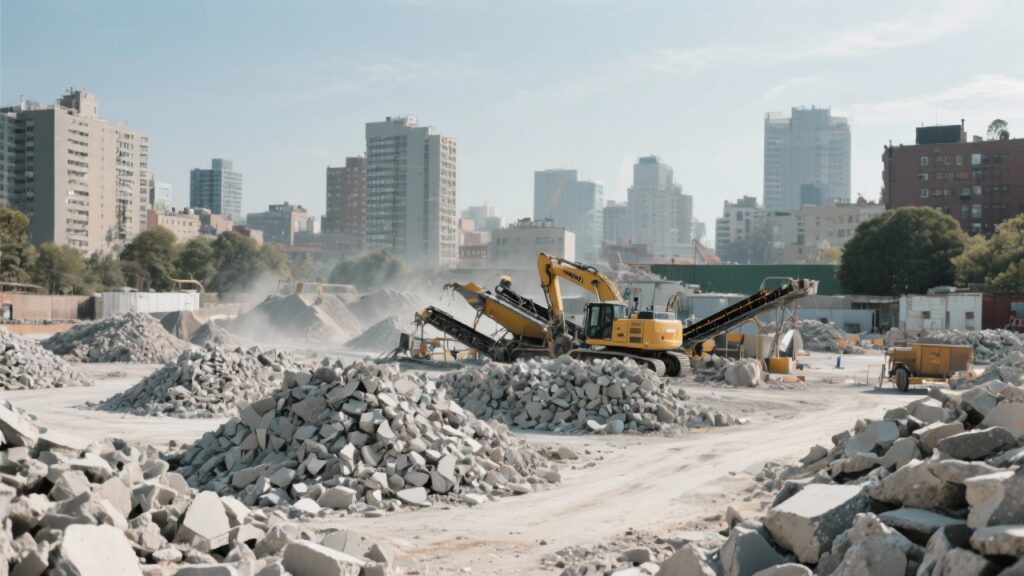
Cities across North America face an unprecedented waste management crisis. Landfills are reaching capacity, hauling costs are skyrocketing, and residents demand more sustainable solutions. While traditional approaches rely on massive centralized facilities miles from urban centers, a revolutionary model is emerging: micro-recycling hubs that bring waste processing directly into neighborhoods. These community-scale facilities, equipped with compact machinery like a rock crusher and other urban waste management equipment, are transforming how cities handle everything from construction debris to household recyclables. The result is a paradigm shift in municipal recycling solutions that reduces landfill pressure while creating jobs and engaging communities.
The Urban Waste Crisis: Why Traditional Landfills Are Failing Cities
The conventional waste management model—collecting everything and hauling it to distant landfills—is collapsing under its own weight. Cities need new approaches to address mounting challenges.
Landfill Capacity Reaching Critical Levels Nationwide
Over 450 landfills across the United States have closed in the past two decades, while waste generation continues climbing. Major metropolitan areas now transport garbage 50-100 miles to available facilities, with some Northeast cities shipping waste to other states entirely. As nearby landfills reach capacity, tipping fees have increased by 40-60% in many markets over the past decade. Cities face a stark reality: the traditional landfill model is economically and logistically unsustainable for urban areas.
Transportation Costs Draining Municipal Budgets
Waste transportation represents one of the fastest-growing line items in city budgets. Hauling waste long distances requires dedicated truck fleets, fuel, maintenance, and driver labor. A mid-size city of 200,000 residents might spend $5-8 million annually just moving waste to distant landfills. These transportation costs divert funds from essential services like education, infrastructure, and public safety. Every dollar spent hauling trash hundreds of miles is a dollar unavailable for community investment.
Environmental Impact of Centralized Waste Systems
The environmental toll of centralized waste management extends beyond landfill methane emissions. Thousands of diesel trucks crisscrossing cities daily generate significant carbon emissions, particulate matter, and air pollution. Communities along waste transportation corridors suffer disproportionate health impacts. Studies show that decentralized waste processing can reduce transportation-related emissions by 60-80% compared to traditional hub-and-spoke models, making it a critical climate action strategy.
What Are Micro-Recycling Hubs and How Do They Work?
Micro-recycling hubs represent a fundamental reimagining of waste infrastructure, bringing processing capabilities directly into neighborhoods where waste is generated.
Decentralized Waste Processing: A New Approach to Urban Recycling
Unlike mega-facilities processing thousands of tons daily, micro-hubs handle 5-50 tons daily, serving populations of 10,000-50,000 residents. These community recycling centers accept materials ranging from construction debris and concrete to metals, plastics, and organic waste. Located in repurposed warehouses, industrial spaces, or purpose-built facilities, micro-hubs process materials on-site rather than shipping them elsewhere. This decentralized waste processing model distributes infrastructure throughout cities, reducing transportation needs while increasing accessibility for residents and businesses.
The Technology Behind Community-Scale Recycling Equipment
Modern urban waste management equipment has evolved dramatically, with manufacturers designing compact, efficient machinery specifically for space-constrained urban environments. Micro-hubs typically include smaller-scale crushers for concrete and asphalt, shredders for wood and plastics, balers for cardboard and metals, and sorting systems. These machines process materials to specifications matching those of large facilities but occupy 70-90% less space. Advanced dust suppression, noise reduction, and odor control technologies make these facilities suitable for operation in populated areas without generating nuisance complaints.
From Neighborhood Drop-Off to Processing Center
Micro-hubs function as both collection points and processing centers. Residents and small businesses deliver materials directly, eliminating curbside collection costs for many waste streams. Staff sort incoming materials, operate processing equipment, and prepare finished products—crushed aggregate, baled metals, processed plastics—for sale to end users. Many hubs incorporate educational components, allowing community members to see recycling processes firsthand, which dramatically increases participation rates and material quality.
Key Benefits of Micro-Recycling Hubs for Cities
The micro-hub model delivers compelling advantages across environmental, economic, and social dimensions.
Dramatic Reduction in Waste Transportation Emissions
By processing materials within 2-5 miles of generation points, micro-hubs eliminate most waste transportation. A city operating five strategically placed micro-hubs might reduce waste hauling miles by 75% compared to sending everything to a single distant facility. This translates to proportional reductions in diesel emissions, traffic congestion, and road wear. For cities pursuing aggressive climate goals, transportation reduction represents one of the most impactful landfill diversion strategies available.
Lower Infrastructure Costs Compared to Mega-Facilities
Building a traditional regional materials recovery facility costs $50-150 million and requires years of planning, permitting, and construction. A micro-hub can be operational for $500,000-$3 million depending on scope and equipment. Cities can implement networks of micro-hubs incrementally, testing and refining the model before full-scale deployment. This lower capital requirement makes municipal recycling solutions accessible to small and mid-size cities previously unable to afford modern waste infrastructure.
Increased Community Engagement and Recycling Rates
Proximity matters enormously in recycling participation. When residents can drop off materials at a convenient neighborhood location rather than driving across town, compliance increases 40-60%. Micro-hubs create visible, accessible touchpoints that remind residents of recycling opportunities daily. Many cities report that neighborhoods with micro-hubs achieve recycling rates 15-25 percentage points higher than citywide averages, demonstrating the power of accessible infrastructure.
Job Creation at the Neighborhood Level
Each micro-hub employs 5-15 people in equipment operation, customer service, maintenance, and management roles. These are middle-skill jobs paying $15-25 per hour, often in neighborhoods that need employment opportunities. Unlike remote mega-facilities accessible only by car, neighborhood hubs provide walking-distance employment. Cities implementing micro-hub networks create distributed economic development, spreading jobs across multiple communities rather than concentrating them in industrial zones.
Municipal Recycling Solutions: Cities Leading the Way
Early adopters demonstrate the viability and scalability of the micro-hub approach across diverse urban contexts.
Portland’s Neighborhood Recycling Network Success Story
Portland, Oregon has operated neighborhood-scale recycling stations since the 1990s, evolving them into full processing hubs over time. The city’s network of seven community recycling centers diverts over 40,000 tons annually from landfills while achieving 90%+ customer satisfaction ratings. Portland’s hubs accept everything from construction debris to household hazardous waste, providing comprehensive services at the neighborhood level. The program costs $4-6 per ton less than traditional collection and disposal, saving taxpayers millions annually while improving service quality.
How European Cities Are Scaling Micro-Hub Models
European cities lead globally in decentralized waste processing. Amsterdam operates 15 neighborhood recycling points serving its 850,000 residents, each equipped with processing capabilities for multiple material streams. Copenhagen’s system of 12 community recycling centers achieves 62% landfill diversion—among the highest rates globally. These cities demonstrate that micro-hubs work even at significant scale, with networks serving major metropolitan populations effectively.
Small and Mid-Size Cities Making Big Impacts
Micro-hubs aren’t just for major metros. Boulder, Colorado (population 105,000) operates two community recycling centers that process 15,000 tons annually. Asheville, North Carolina (population 94,000) diverts 38% of its waste stream through a network of neighborhood drop-off locations with on-site processing. These smaller cities prove that the micro-hub model scales down effectively, making advanced municipal recycling solutions accessible to communities of all sizes.
Essential Urban Waste Management Equipment for Micro-Hubs
Successful micro-hubs require carefully selected equipment that balances processing capacity, space constraints, and urban operating requirements.
Compact Crushers and Shredders for Limited Urban Spaces
Modern concrete crushers designed for urban environments occupy 500-1,500 square feet while processing 5-20 tons per hour—sufficient for neighborhood-scale operations. Mobile and semi-mobile configurations provide flexibility for facilities with varying material flows. Wood shredders, metal shredders, and glass crushers scaled for micro-hub applications enable comprehensive material processing without requiring massive industrial footprints. Equipment manufacturers increasingly offer “urban series” machines specifically engineered for space-constrained operations.
Sorting and Baling Equipment Sized for Community Centers
Small-scale conveyors, picking stations, and automated sorting equipment allow micro-hubs to process mixed recyclables efficiently. Balers sized for 3-10 tons daily production create marketable commodities without requiring the massive hydraulic balers used in regional facilities. This equipment enables micro-hubs to produce quality materials meeting end-market specifications while maintaining neighborhood-appropriate scale.
Mobile Processing Units: Flexibility for Dense Urban Areas
Some cities deploy mobile processing equipment that rotates among neighborhoods, bringing services to residents rather than requiring them to travel. Mobile concrete crushers, chippers, and compactors mounted on trailers or trucks can serve multiple locations weekly. This approach works particularly well in dense urban cores where permanent facility sites are unavailable or unaffordable, making landfill diversion strategies accessible even in space-constrained environments.
Implementing Landfill Diversion Strategies: A Practical Roadmap
Cities considering micro-hubs need systematic approaches to planning, funding, and implementation.
Assessing Your City’s Waste Stream and Infrastructure Needs
Begin with comprehensive waste characterization studies identifying what residents and businesses discard, where waste is generated, and current disposal costs. Map existing infrastructure, identifying potential micro-hub sites near waste generation centers. Analyze transportation costs, landfill fees, and hauling distances to establish baseline metrics. This data reveals which material streams offer the best opportunities for decentralized processing and helps prioritize investments for maximum impact.
Funding Options: Grants, Bonds, and Public-Private Partnerships
Federal and state grants increasingly support decentralized waste infrastructure as part of climate action and circular economy initiatives. Municipal bonds dedicated to waste infrastructure provide low-cost capital for cities with strong credit. Public-private partnerships allow cities to leverage private sector expertise and capital, with operators managing facilities while cities guarantee material flows. Many successful micro-hubs use blended financing combining grants, bonds, and private investment to minimize public costs while ensuring community benefits.
Selecting Strategic Locations for Maximum Impact
Optimal micro-hub locations balance accessibility, waste generation density, zoning compatibility, and community acceptance. Sites near existing industrial or commercial zones minimize land costs and zoning challenges. Proximity to major waste generators—construction zones, commercial districts, dense residential areas—maximizes utilization. Transportation access for both drop-off customers and material pickup is essential. Cities should plan networks of hubs ensuring all residents live within 2-3 miles of a facility.
Overcoming Common Challenges in Micro-Hub Implementation
Despite compelling benefits, cities face predictable obstacles when implementing community recycling centers.
Addressing NIMBY Concerns and Building Community Support
Community opposition often stems from concerns about traffic, noise, odors, and decreased property values. Successful cities address these through transparent communication, facility design emphasizing aesthetics and environmental controls, and community advisory committees providing ongoing input. Demonstrating benefits—convenience, jobs, environmental improvements—builds support. Pilot programs allowing communities to experience hubs firsthand often convert skeptics into advocates when they see well-managed facilities cause no problems.
Ensuring Economic Viability and Long-Term Sustainability
Micro-hubs must process sufficient volumes to cover operating costs while generating revenue from processed materials. Successful facilities typically require 8,000-15,000 tons annually to achieve financial sustainability. Cities can ensure viability by directing municipal waste streams to hubs, establishing minimum volume commitments, or providing operating subsidies offset by avoided landfill and transportation costs. Strong commodity markets for processed materials—crushed concrete, metals, plastics—improve financial performance.
The Future of Urban Recycling: Scaling the Micro-Hub Model
The micro-hub concept continues evolving with technology advances and policy support creating new possibilities.
Technology innovations like AI-powered sorting, advanced material processing, and real-time tracking systems make small-scale facilities increasingly efficient. Integration with smart city infrastructure enables dynamic routing, demand forecasting, and optimization. As more cities adopt micro-hubs, equipment manufacturers invest in purpose-built urban recycling technology, driving continued performance improvements and cost reductions.
The micro-hub model represents more than incremental improvement—it’s a fundamental reimagining of urban waste management. By bringing processing capacity into neighborhoods, cities reduce landfill pressure while creating resilient, distributed infrastructure. As landfills close and transportation costs climb, the question isn’t whether cities will adopt decentralized waste processing, but how quickly they can implement these proven municipal recycling solutions.
Conclusion: Building Resilient Cities Through Decentralized Recycling
Micro-recycling hubs offer cities a path forward from the failing centralized waste model. By processing materials locally, reducing transportation, engaging communities, and creating neighborhood jobs, this approach addresses environmental, economic, and social goals simultaneously. Cities implementing micro-hub networks achieve higher landfill diversion rates at lower costs while building more resilient, sustainable communities. The micro-hub revolution has begun—progressive cities are already reaping the benefits while others continue struggling with outdated infrastructure. The choice for city leaders is clear: embrace decentralized waste processing or watch disposal costs and environmental impacts continue escalating under the old model.
