 by
by 
Key Takeaways
- Luxury living is shaped by privacy, access, road design, and everyday usability, not only by square footage and finishes.
- Gates and guards can add control, but buyers should understand visitor procedures, emergency access, and surveillance policies.
- Hillside communities may offer views and separation while also creating driving, maintenance, and evacuation considerations.
- Association rules and shared costs can protect the setting, yet they may affect renovations, events, deliveries, and landscaping.
A remarkable estate can be visually impressive yet still be a poor match for how a household actually lives. A long driveway, a guesthouse, a pool, and panoramic views are valuable features, but the surrounding community system often determines whether ownership feels easy or demanding. Buyers should evaluate the home, its approach, and the rules governing daily life as a single package.
For buyers researching Beverly Park homes for sale, Jade Mills Estates provides neighborhood-focused information for an estate-oriented community known for controlled access and large-scale residences. The Beverly Hills luxury real estate brand operates across nearby areas, including Bel Air, Holmby Hills, and Beverly Hills, providing prospective buyers with useful local context when comparing privacy, location, and estate living in Los Angeles.
Why Luxury Living Requires A Wider Checklist
A large home does not automatically create a comfortable lifestyle. Consider a buyer who loves a secluded estate but regularly hosts clients, has children with busy schedules, or receives frequent deliveries. If every visitor faces an unclear gate process, if service access is tight, or if the nearest daily errand requires a lengthy drive, the property may create friction that was not obvious during a quiet showing.
The goal is to look beyond visible amenities. Evaluate traffic patterns, driveway turning space, parking, staff circulation, neighborhood quiet hours, and the route from the gate to the home.
How Privacy Works In A Private Community
Privacy has physical and social dimensions. Physical privacy may come from controlled entry, limited through traffic, mature landscaping, setbacks, hillside topography, and a private driveway. Social privacy comes from fewer casual visitors, reduced street activity, and a home layout that separates family areas from guest and service spaces.
Walk the property at different times of day and stand in the rooms and outdoor areas that matter most. Check sightlines from neighboring homes, the street, and nearby hillsides. A tall hedge can help, but it may not block an upper-story window, a drone view, or sound from a nearby pool terrace. Privacy should feel intentional without becoming impractical isolation.
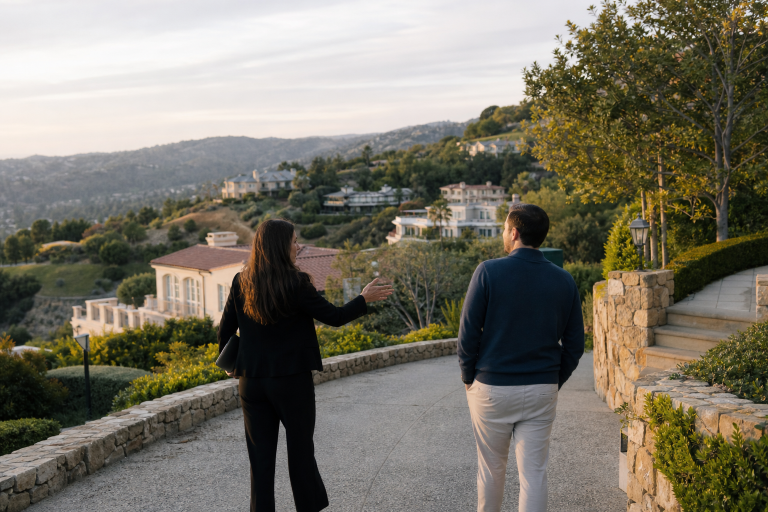
What To Review In A Security Plan
A gate is a layer of security, not a complete plan. Ask how the community handles resident credentials, visitor approval, vendor access, private patrols, camera coverage, and emergency communication. Contractors, housekeepers, rideshare drivers, caterers, and overnight guests can all test whether the process is both secure and workable.
Security Questions That Matter
- Who staffs the gate, and during what hours?
- How are guests and vendors verified before entry?
- Can emergency responders reach the residence without delay?
- Who owns camera footage, who can view it, and how long is it retained?
- What happens when a credential, phone, or access device is lost?
Technology should also be reviewed at the home level. Confirm alarm monitoring, exterior lighting, network reliability, smart locks, backup batteries, and generator capacity. The most sophisticated system is of little use if household members and staff do not know how to operate it.
The Benefits And Limits Of A Hillside Location
Hillside communities can offer natural light, long views, quieter roads, and a stronger feeling of separation from city activity. They may also remain within driving distance of Beverly Hills, business centers, schools, and dining. However, winding routes, steep grades, limited transit, and slower service response times can change the day-to-day experience.
Test important routes during morning, afternoon, and evening conditions rather than relying on a map estimate. During the inspection period, review road width, alternate exits, retaining walls, drainage, and access for large service vehicles. Households should also develop a practical emergency plan using resources such as Ready LA County, especially in areas where wildfires, power interruptions, or evacuation conditions could affect a hillside area.
How Community Design Shapes Daily Life
Private roads, landscaping, and low traffic can create a calm rhythm, but estate living has logistical needs. Review guest parking, package delivery procedures, waste collection, staff entrances, and turning space for caterers or maintenance crews. A home that works beautifully for a dinner party may still be difficult to service if vendors must navigate narrow roads or restricted entry windows.
Also consider how the residence supports the life you expect to lead. Flexible offices, guest suites, wellness rooms, outdoor kitchens, multigenerational areas, and separate staff spaces can add real value when they are well connected to the rest of the property.
Community Rules, Fees, And Shared Responsibilities
Private communities commonly rely on a homeowners’ association or comparable governing structure. Request and read the CC&Rs, current budget, reserve study, meeting minutes, insurance information, architectural guidelines, and records of pending assessments. These documents show how the community manages roads, gates, landscaping, security, and capital repairs.
Rules may affect construction hours, exterior lighting, gates, fences, landscaping, signs, events, and security equipment. These standards can preserve quiet and visual consistency, but a buyer should know the limits before planning a renovation or major gathering. Ask about recent disputes and rule changes as well as the regular fee schedule.
What To Check At The Property Level
- Access and slopes: Inspect driveways, gates, retaining walls, drainage, and service access.
- Privacy lines: Review neighboring windows, lighting, tree cover, and outdoor sightlines.
- Technology: Test internet availability, smart-home controls, cameras, alarms, and backup power.
- Maintenance: Assess roofs, pools, fountains, mature grounds, irrigation, and hillside drainage.
- Permits: Verify approvals for additions, guesthouses, pools, and substantial improvements.
Questions To Ask Before Buying
- How long does visitor entry typically take?
- What rules apply to deliveries, construction crews, and overnight guests?
- Have special assessments been issued recently?
- What emergency routes and backup power plans are in place?
- Which schools, hospitals, airports, offices, and shopping areas are most convenient?
- How private are the primary bedroom, pool, terraces, and entertaining spaces?
Who May Enjoy This Lifestyle Most
This lifestyle can suit households that value quiet surroundings, controlled access, generous outdoor space, and private entertaining. It can be especially appealing to buyers who work from home, travel often, host extended family, or prefer that the home serve as a complete personal retreat.
Buyers who prioritize walkability, spontaneous errands, neighborhood cafes, and immediate access to public spaces may prefer a more connected setting. The strongest purchase is not necessarily the largest or most famous estate. It is the home and community that align with a household’s expectations for privacy, security, access, upkeep, and everyday comfort.

