 by
by 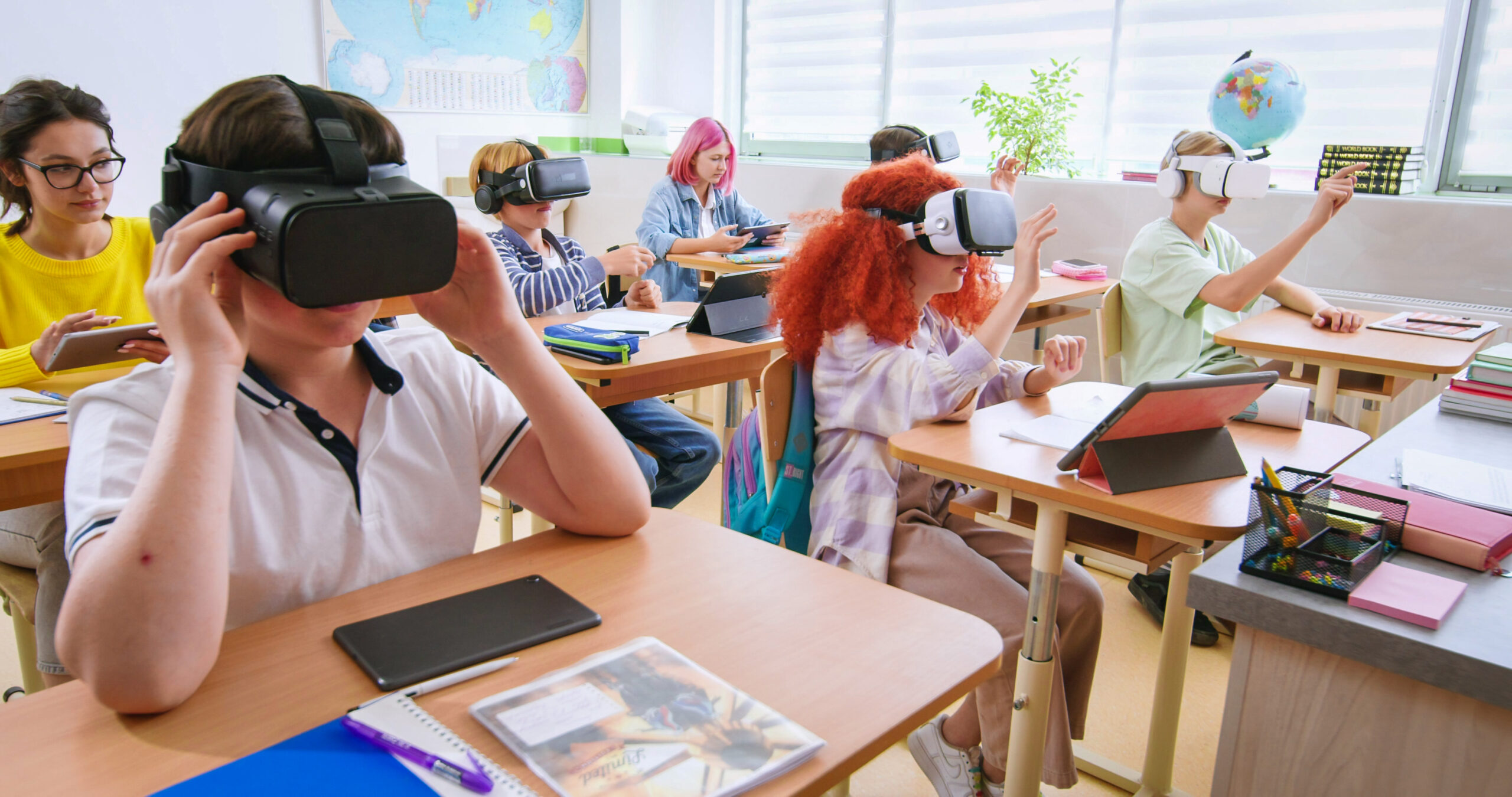
Introduction: Finding Harmony in Modern Education
The rapid proliferation of educational tech has fundamentally altered the classroom landscape, presenting both unprecedented opportunities and significant challenges for instructional practice. This technological revolution has sparked ongoing debates about the optimal balance between digital innovations and traditional teaching methodologies. While technology offers powerful tools for personalization, engagement, and efficiency, long-established educational approaches continue to demonstrate enduring value. The most effective educational environments typically emerge not from wholesale adoption of either extreme but from thoughtful integration that leverages the strengths of both technological and traditional methodologies. This balanced approach recognizes that technology functions best as a complement to, rather than replacement for, the fundamental human elements that have always characterized effective education.
The Enduring Value of Traditional Teaching Approaches
The Irreplaceable Human Connection
Despite technological advances, the human relationship between educators and students remains at the heart of effective learning experiences. Skilled teachers bring emotional intelligence, cultural responsiveness, and intuitive understanding to educational interactions in ways that technology cannot fully replicate. The encouragement of a trusted mentor, the nuanced interpretation of a student’s confused expression, and the spontaneous adaptation to emerging classroom dynamics all represent distinctly human capabilities that technology may enhance but cannot replace. Research consistently demonstrates that positive teacher-student relationships correlate strongly with academic achievement, motivation, and social-emotional development.
The Power of Direct Instruction and Modeling
Traditional direct instruction continues to prove highly effective for certain types of learning, particularly when introducing new concepts, demonstrating procedures, or conveying complex information efficiently. Skilled educators can present information with clarity, emphasis, and contextual framing that helps students organize and internalize new knowledge. Additionally, the modeling provided through traditional instruction extends beyond academic content to encompass critical thinking processes, problem-solving strategies, and intellectual curiosity. These cognitive apprenticeships, where students observe expert thinking made visible, remain powerful pedagogical tools that technological instruction often struggles to replicate with equal effectiveness.
Dialogue, Discussion and Collaborative Learning
Face-to-face discussion and collaborative learning activities foster uniquely valuable educational experiences. The spontaneous exchange of ideas, real-time negotiation of meaning, and immediate social feedback create rich learning environments that develop both academic understanding and interpersonal skills. While digital platforms can facilitate certain forms of collaboration, they typically cannot fully capture the subtleties of in-person interaction: the non-verbal cues, emotional resonance, and spontaneous connections that emerge when learners engage directly with one another. Traditional collaborative learning structures continue to develop the communication skills, perspective-taking abilities, and social competencies that remain essential in our increasingly interconnected world.
The Transformative Potential of Educational Technology
Personalization at Scale
Perhaps the most significant contribution of educational technology is its capacity to personalize learning experiences in ways that would be logistically impossible in traditional settings. Adaptive learning platforms can analyze individual performance patterns, identify specific areas of strength and difficulty, and dynamically adjust content, pacing, and instructional approaches to meet each student’s needs. This capacity for differentiation addresses one of education’s most persistent challenges: effectively serving diverse learners with varying abilities, background knowledge, and learning preferences within the constraints of limited instructional time and resources.
Expanding Access Beyond Traditional Boundaries
Digital tools have dramatically expanded educational access across geographical, temporal, and physical barriers. Online learning platforms make quality educational content available to students in remote locations, those with mobility limitations, or individuals whose life circumstances prevent traditional school attendance. Digital resources also extend learning beyond the constraints of the school day and physical classroom, creating opportunities for anytime, anywhere education. This expanded access represents a powerful democratizing force in education, though realizing this potential requires addressing persistent digital divide issues that affect marginalized communities.
Enhanced Engagement Through Multimedia and Interactivity
Well-designed educational technology can transform passive learning experiences into active, engaging interactions. Multimedia presentations make abstract concepts concrete through visual representation, interactive simulations allow students to manipulate variables and observe outcomes, and gamified learning experiences leverage intrinsic motivation principles to sustain engagement with challenging content. These approaches can be particularly valuable for learners who struggle with traditional text-based instruction or those who benefit from multiple representational formats. When thoughtfully implemented, technology-enhanced engagement supports deeper learning and stronger retention than passive instructional approaches.
Integration Models: Combining Traditional and Technological Approaches
The Blended Learning Continuum
Effective integration of traditional and technological approaches typically occurs along a continuum of blended learning models. These models vary in the proportion and relationship of digital and traditional elements, from technology-enhanced traditional instruction to primarily online learning with strategic face-to-face components. Station rotation models alternate students between digital and traditional learning activities, lab rotation models dedicate specific physical spaces to different instructional modalities, and flipped classroom approaches utilize digital content delivery outside class to enable more interactive application activities during class time. The optimal blended model depends on specific educational goals, student characteristics, available resources, and institutional contexts.
Technology as Amplifier of Traditional Practices
Some of the most successful integration approaches conceptualize technology as an amplifier of effective traditional practices rather than a replacement for them. Digital tools can extend the reach of classroom discussions through online forums that continue conversations beyond class time, enhance the impact of teacher feedback through audio or video commentary that conveys nuance and encouragement, and expand the audience for student work from a single teacher to authentic global communities. This amplification perspective preserves the core elements of proven pedagogical approaches while leveraging technology to overcome traditional limitations of time, space, and scale.
Strategic Selection for Pedagogical Purpose
Thoughtful integration requires strategic matching of instructional methods to specific learning goals rather than defaulting to either technological or traditional approaches. For building factual knowledge and procedural fluency, adaptive practice applications might provide efficient, personalized reinforcement. For developing critical thinking and complex problem-solving, facilitated face-to-face discussions might offer richer opportunities for cognitive development. For creative production and authentic application, a combination of digital creation tools and human mentorship often yields optimal results. This selective approach focuses on pedagogical purpose rather than technological novelty or tradition for its own sake.
Implementation Challenges and Strategies
Developing Teacher Technological Pedagogical Content Knowledge
Effective integration demands sophisticated teacher knowledge that combines technological understanding, pedagogical expertise, and content mastery. This technological pedagogical content knowledge (TPACK) framework recognizes that teachers need more than basic technological skills; they must understand how specific technologies interact with particular content domains and pedagogical approaches. Developing this integrated knowledge requires sustained professional learning opportunities, collaborative planning time, and administrative support for experimentation. The most successful professional development approaches emphasize authentic application in teachers’ specific instructional contexts rather than generic technology training divorced from pedagogical purpose.
Creating Physical Environments for Integrated Learning
The physical design of learning spaces significantly influences the effectiveness of integrated approaches. Traditional classrooms arranged for teacher-centered instruction often hinder technology integration, while overly technology-centered environments may discourage valuable face-to-face interaction. Flexible learning spaces that can be readily reconfigured for different instructional modalities better support balanced integration.
These adaptable environments might include movable furniture for easy transitions between whole-group, small-group, and individual arrangements; multiple projection capabilities to facilitate shifting between digital and non-digital focal points; and strategically placed technology resources that support collaboration without dominating the physical space.
Addressing Equity in Integrated Approaches
Balanced integration approaches must explicitly address equity considerations to avoid exacerbating existing educational disparities. Students from lower socioeconomic backgrounds often have less access to technology outside school hours, potentially limiting their ability to benefit from approaches like flipped classrooms that rely on home technology use.
Similarly, English language learners and students with disabilities may encounter additional barriers when navigating digital learning environments without appropriate supports. Effective integration requires proactive identification of potential equity issues and implementation of strategies to ensure that all students benefit equally from integrated approaches, such as providing extended technology access before and after school hours or developing specialized digital scaffolds for students with particular learning needs.
Evaluating the Effectiveness of Balanced Approaches
Moving Beyond False Dichotomies
Meaningful evaluation of integrated approaches requires moving beyond simplistic technology-versus-tradition dichotomies to consider the specific ways different instructional elements interact to support learning. Rather than asking whether technology is more or less effective than traditional instruction, more productive evaluation questions focus on which combinations of approaches best support particular learning outcomes for specific student populations in given contexts. This nuanced evaluation perspective recognizes that effectiveness depends on complex interactions among multiple variables rather than simplistic either/or propositions.
Multiple Measures of Success
Comprehensive evaluation of balanced approaches requires multiple measures that capture diverse dimensions of educational effectiveness. Academic achievement metrics remain important but provide an incomplete picture when used alone. Additional measures might include student engagement indicators, development of self-directed learning skills, growth in collaboration capabilities, and changes in attitudes toward academic content. Particularly valuable are assessments that capture transfer of learning to authentic contexts and development of metacognitive abilities that support lifelong learning. This multifaceted assessment approach aligns with the diverse learning goals that integrated instruction typically aims to address.
Continuous Improvement Through Evidence-Based Iteration
Rather than seeking a perfect, fixed integration model, the most successful educational programs embrace continuous improvement through systematic collection and analysis of implementation evidence. This iterative approach involves documenting specific integration practices, gathering data on multiple outcomes, analyzing patterns to identify effective and ineffective elements, and making targeted refinements based on these insights. By establishing this evidence-based improvement cycle, educational institutions can gradually optimize their particular blend of traditional and technological approaches to address their specific educational goals and student needs.
Future Directions: Toward Synergistic Integration
Artificial Intelligence as Teacher Augmentation
Emerging artificial intelligence applications show particular promise for augmenting rather than replacing human teaching capabilities. AI systems can handle routine instructional tasks like basic content delivery and skills practice, analyze patterns in student work to identify learning gaps, and manage logistical aspects of classroom operation. This automation of lower-level functions potentially frees human educators to focus on higher-value activities like relationship building, complex feedback provision, and facilitation of deep thinking—precisely the areas where human expertise remains most irreplaceable. This augmentation perspective offers a more productive vision than replacement narratives that position technology and teachers in opposition.
Reimagining Educational Roles and Structures
Truly transformative integration may ultimately require reimagining traditional educational roles and structures. Rather than maintaining conventional distinctions between technology specialists and classroom teachers, some schools are developing collaborative instructional teams with complementary expertise. Similarly, rigid class schedules and standardized groupings may give way to more flexible arrangements that better accommodate the personalized pacing that technology enables. These structural innovations recognize that maximizing the benefits of integrated approaches often requires rethinking organizational patterns developed for industrial-era education rather than simply adding technology to existing structures.
Conclusion: The Art of Educational Integration
Finding the optimal balance between technological and traditional approaches represents one of education’s most significant contemporary challenges. This balance cannot be reduced to simple formulas or prescriptive models applicable across all contexts. Rather, it requires the art of educational integration: the thoughtful, contextually responsive combination of diverse instructional elements to create coherent learning experiences that leverage the strengths of both innovative and traditional approaches.
The most successful educational environments will likely be those that maintain unwavering focus on fundamental learning goals while flexibly incorporating both time-tested methods and emerging innovations. They will preserve the irreplaceable human elements that have always characterized powerful education—meaningful relationships, moral purpose, and intellectual mentorship—while embracing technology’s capacity to transcend traditional limitations of time, space, and individualization. This balanced integration offers our best hope for educational systems that honor educational wisdom from the past while preparing students for a rapidly evolving future.

