 by
by 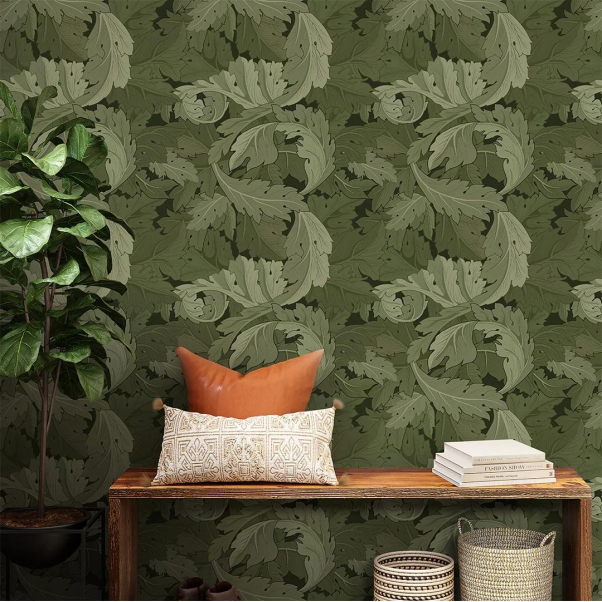
Cottagecore didn’t peak and fade the way most micro-trends do. What started as a pandemic-era fantasy about slowing down and reconnecting with nature has quietly matured into a genuine interior design movement with real staying power. At the center of it is a very specific visual language: trailing botanicals, hand-drawn florals, weathered textures, and the kind of pattern work that feels like it belongs in a rambling English country house rather than a modern apartment. And the easiest single way to bring that language into a home is through wallpaper.
William Morris peel and stick wallpaper captures this aesthetic more completely than almost anything else on the market. Morris, the Victorian designer and craftsman who spent his career documenting the flora of the English countryside in intricate repeating patterns, essentially invented the visual grammar that cottagecore borrows from. Honeysuckle, willow, strawberry thief, acanthus — his designs are still being produced 150 years later because they remain genuinely beautiful and surprisingly current.
Why the English Countryside Look Is Having a Moment
The appeal is partly cultural and partly a reaction. After years of hard minimalism — concrete floors, white walls, furniture with no ornamentation — there’s a growing appetite for interiors that feel warm, layered, and slightly impractical in the best possible way. Rooms that look like they accumulated rather than were designed. Walls with pattern and history. Textiles that have texture and weight.
The English country house aesthetic delivers all of that. It’s a look built on richness and accumulated character: florals mixing with stripes, old furniture sitting alongside newer pieces, books stacked on every surface, and walls that do real visual work rather than simply receding into the background.
The Role Wallpaper Plays in the Look
In a true English country interior, the walls are rarely plain. Pattern is a foundational element of the aesthetic, not an afterthought. The wallpaper establishes the room’s personality — everything else builds from it.
Cottagecore wallpaper tends to share a few key characteristics: botanical subject matter drawn from the natural world, a hand-illustrated quality that suggests craft rather than digital production, a slightly muted or aged color palette, and generous pattern scale. These aren’t small, tight repeats — they’re expansive, confident patterns that fill a wall with something worth looking at.
The most popular motifs right now include climbing roses and honeysuckle, dense woodland scenes with birds and foxes, delicate wildflower meadow prints, and the classic Morris-style acanthus leaf in deep forest green or indigo blue.
Room by Room: Where the Look Works Best
Living rooms are the natural home for English countryside wallpaper. A drawing room papered in a William Morris-inspired botanical print, furnished with a mix of upholstered sofas, wooden side tables, and layered rugs, is the core expression of the aesthetic. The wallpaper should feel like the room grew around it.
Kitchens and dining rooms suit the look particularly well when the pattern is slightly more graphic and the colors pull toward warm terracottas, sage greens, or the deep blues of traditional Delftware. A kitchen with botanical wallpaper above a painted dado rail is a very specific kind of pleasure.
Bedrooms benefit from the softer end of the cottagecore palette — trailing florals in dusty pink and cream, delicate bird prints, or soft watercolor botanicals create a genuinely restful sleeping environment that feels far removed from the hotel-room uniformity of most contemporary bedroom design.
Reading nooks and small spaces are worth special mention. A window seat or a small alcove papered in a rich, detailed pattern becomes one of the most compelling spots in a house. The scale of the space means you can use a bolder, more dramatic pattern than you might risk on a full room.
Styling the Look Without Overdoing It
The English countryside aesthetic has a reputation for tipping into clutter, but the difference between a room that feels curated and one that feels chaotic comes down to a few principles.
Keep the furniture relatively simple and let the wallpaper carry the pattern weight. Pair botanical wallpaper with solid-color upholstery in coordinating tones rather than additional competing patterns. Use natural materials throughout — wood, linen, wool, wicker, stone — to keep the room grounded. And resist the urge to match everything too precisely; the look is supposed to feel collected over time, not purchased in one afternoon.
CostaCover’s William Morris and cottagecore collections are a strong starting point for exploring this aesthetic, particularly in peel and stick format — which makes it easy to test a bold botanical pattern in a specific room before committing fully.
One Practical Note
Morris-inspired and cottagecore wallpapers typically have large pattern repeats, which means more waste when cutting and hanging panels. Always calculate your square footage and add at least 15% for repeat matching. Order more than you think you need — running out mid-project and finding the same batch is rarely straightforward.

