 by
by 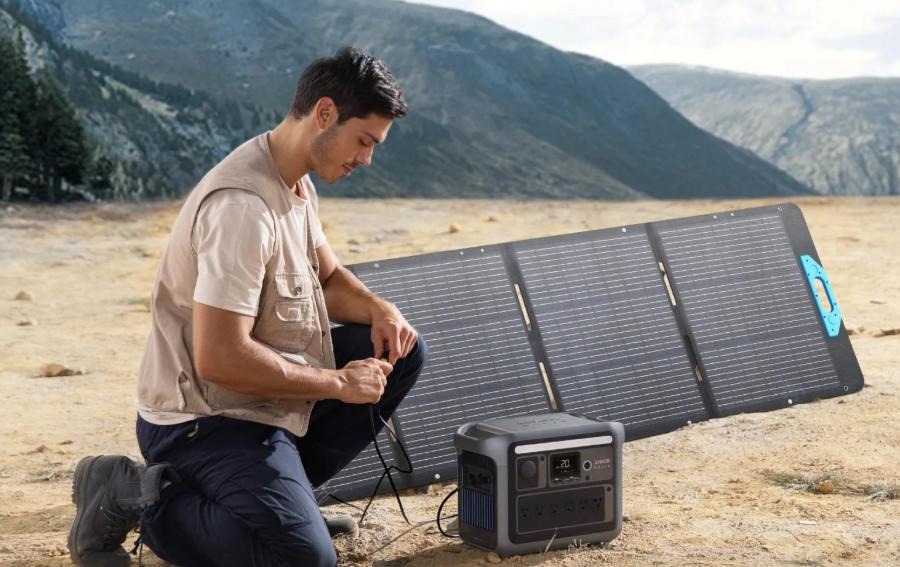
Solar charging performance often depends on factors users do not initially notice. One of the most influential factors is the angle at which panels face the sun. Even premium systems lose efficiency when sunlight strikes the panels at suboptimal angles. Many users learn this only after experiencing slower-than-expected charging or inconsistent performance throughout the day. Angle adjustment becomes essential for maximizing energy capture, especially when using a portable solar power generator during camping, off-grid trips, or home backup situations. This is also why a system like the Anker SOLIX C1000 Solar Generator + 200W Solar Panel benefits from careful positioning—its fast solar recharging potential performs best when users help the panels work with, not against, the movement of the sun.
Why Does Panel Orientation Matter This Much?
Sunlight Strikes the Panel Differently Throughout the Day
The sun’s angle changes continuously, shifting from low in the morning to high at midday and then lowering again in the afternoon. When panels sit at a fixed angle, they only match this ideal alignment for a limited window. The rest of the day, sunlight reaches the panel at a slant, reducing energy absorption. Users who expect “full power” all day often feel disappointed until they understand this dynamic. By adjusting panel angle at different times—especially when camping or moving locations—you improve exposure and raise the net wattage captured. This directly supports faster solar recovery for systems like the C1000, which can accept up to 600W of solar input under optimal conditions.
The Angle Controls How Much Light Actually Enters the Solar Cells
Solar cells perform best when sunlight arrives perpendicular to their surface. When the panel tilts too steeply or lies too flat, the cells gather less energy, even though the sun appears bright. First-time users sometimes assume brightness guarantees strong charging. In reality, the geometry of light striking the panel determines efficiency. With proper angle adjustment, each photon has a higher chance of entering the cell and being converted into electricity. The C1000’s ability to achieve a full charge in under an hour through AC input means users see how fast charging can be; adjusting solar panels makes solar recovery feel similarly responsive and predictable.
Seasonal Changes Make Fixed Angles Even Less Effective
Summer sun sits higher, while winter sun drops lower along the horizon. If users rely on a single panel angle year-round, solar production varies more dramatically than expected. A panel properly angled for July performs poorly in December. Those who travel between regions notice this even more. Adjusting the angle seasonally helps maintain efficient charging across different climates and environments. Combined with the C1000’s long-lasting LFP battery chemistry and rugged temperature tolerance, good angle management ensures consistent performance across the year.
How Do Users Optimize Angle Adjustment for Better Real-World Charging?
Aligning Panels With the Sun’s Movement Increases Wattage Stability
The simplest method—yet the most overlooked—is manually repositioning the panel several times per day. Users who tilt the panel toward the sun in the morning, raise it closer to vertical at mid-day, and lower it again in the afternoon consistently report more reliable energy gains. These incremental adjustments help prevent the sharp drops in wattage that occur when panels sit idle. While many solar generator owners rely solely on mid-day sun, users who actively adjust orientation often achieve up to double the total daily solar energy, especially when using a 200W portable panel setup like that paired with the C1000.
Proper Tilt Reduces Losses From Reflection and Glare
When sunlight hits a panel at a shallow angle, much of it reflects off the surface rather than entering the cells. You can observe this by standing slightly to the side of a poorly angled panel—you’ll see an obvious shine. Tilting the panel correctly minimizes this reflective loss and pushes more light directly into the photovoltaic layer. This improves efficiency without requiring any extra equipment. Because the C1000 supports quick solar recharging, reducing reflective loss makes a noticeable difference in how quickly the battery recovers during partly cloudy days or shorter daylight periods.
Angle Adjustment Helps Avoid Shading That Users Often Overlook
Shading is not always caused by trees or buildings; sometimes the panel itself becomes shaded when the angle is too low. Nearby objects—a cooler, a tent wall, or even the user’s shadow—can reduce input significantly. Flat panels placed on the ground often collect partial shade in early morning or late afternoon. Angle adjustments lift the panel into clearer sunlight, reducing accidental shading throughout the day. With the C1000’s app providing real-time wattage readings, users quickly notice the performance jump when shading issues disappear.
Conclusion
Angle adjustment remains one of the simplest yet most impactful ways to improve solar charging efficiency. Many users underestimate how much sunlight direction, tilt, and seasonal variation affect overall energy capture. When panels face the sun more directly, they gather more usable light, reduce reflection, avoid shading, and deliver steadier wattage over the course of the day. These improvements amplify the advantages of systems like the Anker SOLIX C1000 Solar Generator + 200W Solar Panel, which already offers fast solar recharging, app-based optimization, and long-lasting LFP batteries. With thoughtful positioning and regular adjustments, users maximize daily output and ensure their solar generator performs at its highest potential.
