 by
by Key Takeaways
- Native and drought-tolerant plants reduce water bills and maintenance costs.
- Smart irrigation offers significant water savings by responding to real-time conditions.
- Permeable hardscapes manage runoff and replenishes groundwater.
- Biodiverse landscapes foster healthy habitats for pollinators and wildlife.
- Recycled and local materials lessen your landscaping’s environmental footprint.
In today’s world, designing an attractive outdoor space is no longer just a matter of curb appeal—it’s about conscious choices that honor and protect the environment. Homeowners are turning to sustainable landscaping as a means to create vibrant, resilient yards that conserve resources and reduce environmental impact. Whether you have a sprawling garden or a compact city space, adopting sustainable practices ensures your yard flourishes while staying eco-friendly. For those looking to upgrade their landscape in the Orlando area, expert landscaping services can be an asset in transforming your vision into reality.
Sustainable landscaping focuses on strategies that minimize water use, support local wildlife, and reduce chemical dependencies, all while creating beautiful and functional outdoor spaces. The shift toward ecological design not only benefits the planet but also supports healthier living for your family and community. From choosing drought-resistant plants to implementing innovative irrigation systems, each decision in your landscape plan can have a lasting positive impact.
By embracing these principles, your garden can become a haven that gives back to nature rather than taking from it. Sustainability in landscaping isn’t only for large properties—it can be adapted to any size or style of yard. With expert guidance from local professionals and ongoing maintenance, you’ll enjoy a thriving landscape season after season.
For those interested in working with experienced landscaping companies, it can be helpful to connect with professionals who specialize in eco-friendly solutions and understand the unique challenges of your climate zone.
Choose Native and Drought-Tolerant Plants
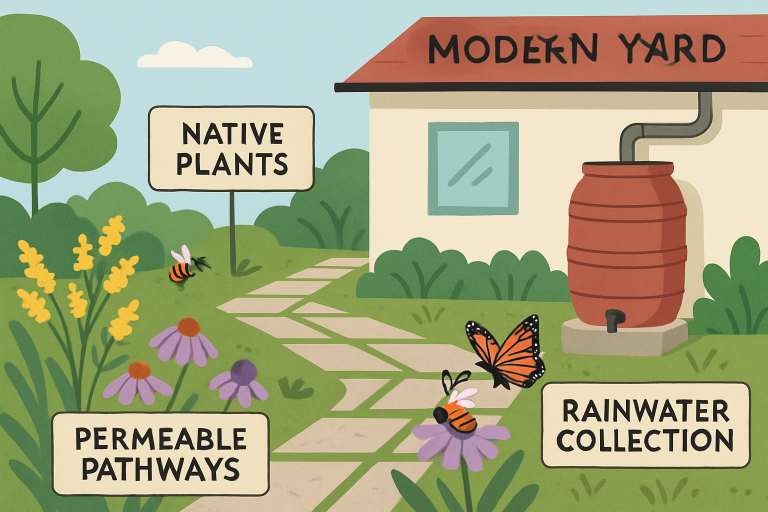
Native plants form the foundation of sustainable landscaping. Adapted to local soil, rainfall, and temperature patterns, these species typically require less irrigation and are naturally resilient to pests and diseases. In drier climates, drought-resistant options like lavender, sage, and succulents not only reduce water use but also infuse modern yards with architectural beauty. This approach, aligned with the “desert modernism” garden design trend, promotes sustainability while creating dynamic, low-maintenance gardens that feel current and timeless. Learn more about the advantages of native plants from the National Audubon Society.
Implement Smart Irrigation Systems
Water is precious, and traditional sprinkler systems often result in significant water wastage. Intelligent irrigation systems make conserving water nearly effortless. These advanced systems rely on soil moisture sensors and connect with real-time weather data to deliver only the precise amount of water needed. As a result, homeowners can reduce their irrigation water use by up to 40%—an impressive way to keep both your garden lush and your utility bills under control.
Incorporate Permeable Hardscape
Concrete patios and driveways are notorious for creating water runoff that can overwhelm municipal drainage and pollute local waterways. Permeable hardscape, such as gravel paths, permeable pavers, or porous asphalt, directs water back into the ground, where it can be absorbed by plants and replenish the local water table. This approach supports healthy soil and reduces erosion, while allowing you to maintain walkability and structure in your garden design. The Environmental Protection Agency outlines the benefits of permeable pavement for both homeowners and communities alike.
Design for Biodiversity and Pollinator Support
Encouraging diversity in your plant selection can transform your yard into a thriving ecosystem. By intentionally incorporating nectar-rich perennials, flowering shrubs, and a variety of seasonal blooms, you create critical habitats for bees, butterflies, birds, and other beneficial insects. Planting clusters of the same flower species and staggering their bloom times helps ensure a steady food source for pollinators throughout the year. Simple additions, such as birdbaths, bee houses, and small water features, can further support local wildlife.
Use Recycled and Locally Sourced Materials
Resource-conscious hardscape choices are vital in sustainable landscape design. Materials such as reclaimed wood, recycled glass, or locally quarried stone not only reduce the carbon footprint of your landscape project but also lend unique character to walkways, retaining walls, and patios. These eco-friendly materials are both beautiful and durable, ensuring that your design remains sustainable from the ground up.
Practice Sustainable Lawn Alternatives
Traditional lawns are high-maintenance and resource-intensive, often requiring chemical fertilizers, excess water, and repeated mowing. Low-water groundcovers such as clover, creeping thyme, or native grass mixes can replace lawns, slashing water use by as much as 100% while supporting soil health and local biodiversity. These alternatives are not only more environmentally friendly but also reduce the time and cost associated with lawn care.
Incorporate Edible Landscaping
Edible landscaping combines beauty and utility by integrating fruit trees, herbs, berries, and vegetables into visually striking arrangements. Edible plants can be woven into borders, grown on trellises, or clustered in elegant kitchen gardens. This not only reduces food miles for your home-grown produce but also adds a dynamic, evolving element to your landscape, where both aesthetics and sustainability are on display.
Conclusion
Adopting sustainable landscaping practices means every aspect of your yard can support local ecosystems, save resources, and create a healthier environment for your family. By choosing native plants, optimizing irrigation, designing for biodiversity, and utilizing recycled materials, you invest in a landscape that continues to give. Forward-thinking homeowners and skilled professionals working together can shape outdoor spaces that thrive for generations.
