 by
by Key Takeaways
- Standing water can result from poor grading, low spots, roof runoff, compacted soil, irrigation leaks, or hard surfaces.
- An effective drainage plan identifies where water starts, how it travels, and where it can safely discharge.
- Small maintenance tasks may solve minor issues, while persistent foundation or crawlspace moisture needs closer evaluation.
- Swales, catch basins, French drains, re-grading, and rain gardens solve different water-management problems.
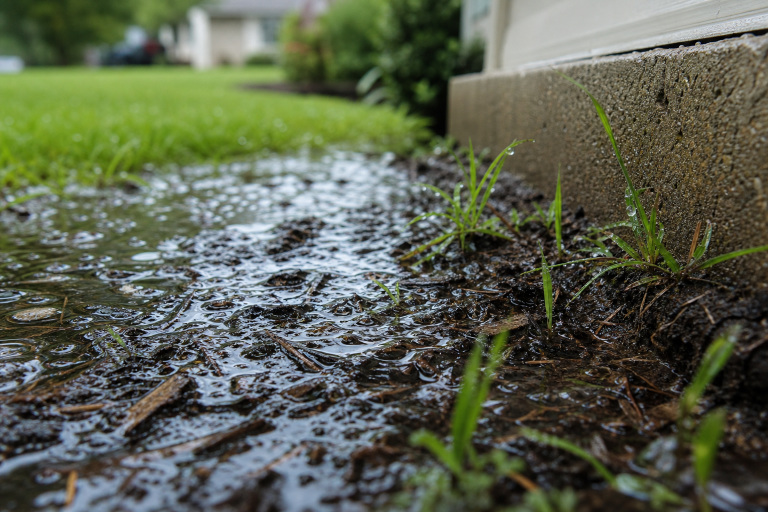
A puddle on the lawn may seem like a minor inconvenience, but recurring wet spots can indicate a larger drainage problem. Water can soften soil, wash away mulch, damage turf, undermine walkways, and remain against foundation walls long after a storm ends. Yards often look normal during dry weather. Heavy rain reveals the real conditions by showing where water collects, which areas drain slowly, and whether runoff is directed toward the home rather than away from it.
Why Yard Drainage Problems Deserve Attention
Moisture that lingers near the house can create muddy paths, exposed roots, thinning grass, erosion, and mosquito-friendly puddles. More importantly, water repeatedly collecting near a foundation may contribute to damp conditions below the home, including in a crawlspace. Hard surfaces make the issue more noticeable because roofs, driveways, sidewalks, and patios shed water quickly. The EPA explains that rain falling on paved and built surfaces cannot soak into the ground as it would in an undeveloped landscape, so stormwater runoff flows over roofs, streets, and pavement instead. Landscape additions also need a defined path for overflow and drainage. This matters for planted beds, patios, and decorative water features, since water that escapes their intended area can saturate nearby soil or migrate toward a structure.
Common Signs of Poor Drainage
- Water remains for more than a day after typical rainfall.
- The same lawn area stays soft, muddy, yellow, or bare.
- Soil beside the home feels soggy, or mulch repeatedly washes away.
- Walkways settle, edge joints erode, or roots become exposed.
- Foundation walls, vents, or crawlspace materials have mildew, dampness, or musty odors.
- Insulation is wet, wood is discolored, or standing water appears in the crawlspace.
Find the Source Before Choosing a Fix
Observe the property during rain, then again several hours later, before digging or installing a drain. Take photos, trace water uphill toward roofs, driveways, slopes, patios, or adjacent properties, and note how long each wet area takes to dry. Check downspouts, visible grates, buried outlets, and irrigation zones for blockages, leaks, crushed pipe, or disconnected sections. Call 811 before any excavation so underground utilities can be marked.
Five Common Causes of Standing Water
1. Low Spots in the Lawn
Settlement, old construction work, and worn turf can leave shallow bowls that trap water. Adding soil can help, but only if the finished surface blends into a slope that directs water to a suitable outlet rather than moving the puddle elsewhere.
2. Poor Yard Grading
Ground near a home should generally be graded to lead water away from the structure. A reverse slope, where soil rises away from the yard and toward the foundation, can funnel runoff toward a basement, crawlspace, or wall.
3. Concentrated Downspout Runoff
A roof collects rainfall from a broad area and releases it through a few small downspouts. Splash blocks, extensions, or properly designed underground lines may help, but water still needs a stable destination that does not affect a walkway, neighboring property, or foundation.
4. Compacted or Clay-Rich Soil
Compacted and clay-heavy soils absorb water slowly, so even a correctly shaped lawn may stay wet. Aeration, organic matter, and plant selection can improve a limited area, while widespread drainage problems may need a surface or subsurface solution.
5. Runoff From Hard Surfaces
A new driveway, patio, or roof change can alter water flow across the entire property. Water that once soaked into the planted ground may now collect at a fence line, a low lawn area, or a foundation edge.
Drainage Solutions and When They Fit
- Downspout extensions: Useful when roof runoff is released beside the house. Their outlet should remain open, protected from erosion, and directed safely.
- Yard re-grading: Best for broad surface-water problems caused by uneven slopes. Finished grades must account for doors, siding, windows, trees, patios, and retaining walls.
- Swales: Shallow, shaped channels that guide water across a yard. Planted swales can slow runoff, but they still need a clear outlet and controlled overflow route.
- French drains: Subsurface systems that collect or redirect water below ground. Proper slope, clean stone, suitable pipe, filter fabric, and a discharge point are essential. They are not automatically the right fix for every surface puddle.
- Catch basins and buried lines: Useful at low points near patios, lawns, or paved surfaces. Debris, undersized pipes, and blocked outlets can cause backups, so access for cleaning matters.
Rain Gardens and Green Solutions
A rain garden is a shallow planted basin that receives runoff, slows it, and allows it to soak into prepared soil between storms. The City of Raleigh notes that rain gardens collect runoff from impervious surfaces such as roofs, sidewalks, driveways, and patios. Suitable sites need absorbent soil, a safe overflow route, distance from buildings, and clearance from utilities, easements, tree roots, and steep slopes. They can complement structural drainage, but should not replace needed repairs where water threatens the home.
How Much Water Can a Roof Produce?
One inch of rain on a 1,000-square-foot roof produces roughly 623 gallons of runoff before small losses are considered. That simple example explains why a short, intense storm can overwhelm a single downspout or saturate the soil beside a house. Roof size, gutter condition, downspout placement, and outlet capacity all affect what happens next.
Irrigation and Crawlspace Moisture
Before installing a major system, inspect sprinklers for broken heads, overspray, leaks, and run times that keep soil wet. Water sprayed onto siding, sidewalks, or foundation zones can mimic a rain-related drainage problem.
For crawlspaces, start outside: clean gutters, route downspouts appropriately, correct obvious grading issues, and address plumbing leaks. Damp insulation, condensation, mold-like odors, wood discoloration, or standing water may also warrant assistance from a qualified drainage, waterproofing, structural, plumbing, or indoor air professional.
Simple Maintenance Plan
- Monthly: Check downspouts, grates, outlets, and erosion.
- Before storm season: Clean gutters and inspect accessible drain lines.
- After heavy rain: Photograph puddles, washouts, and crawlspace moisture.
- Seasonally: Adjust irrigation and clear plant debris from drainage paths.
When to Seek a Site Evaluation
Professional input is sensible when water enters the home, persists for several days, worsens erosion, affects retaining walls, crosses an easement, approaches public stormwater infrastructure, or returns after a previous installation. Before work begins, ask where the water originates, where it will go during a larger storm, how the landscape will be restored, and what maintenance or permits may be required.
Conclusion
A well-drained yard starts with understanding the source and direction of water before choosing a solution. By observing problem areas during and after rainfall, checking grading, gutters, downspouts, irrigation, and soil conditions, homeowners can avoid applying the wrong fix. Simple maintenance may resolve minor pooling, while persistent moisture near foundations, crawlspaces, walkways, or retaining walls may require a more detailed evaluation. Solutions such as regrading, swales, French drains, catch basins, and rain gardens each serve different purposes and should be selected based on the property’s specific needs. Planning for safe discharge and future maintenance is just as important as moving water away from a problem area. With careful observation and the right drainage strategy, homeowners can reduce standing water, protect their landscape, and help prevent recurring moisture and erosion problems.
